
AI automation in Oman: a practical playbook for SMEs
Oman's digital economy push makes AI feel urgent, but most SMEs do not need a grand AI strategy. They need one dependable workflow that saves hours every week.
Oman is no longer talking about digital transformation as a future ambition. The National Digital Economy Program aims to raise the digital economy's contribution to GDP over the long term, the Government Digital Transformation Program has pushed public-sector digitisation through 2021-2025, and Oman's AI Policy 2025 frames AI around competitiveness, transparency, accountability, privacy, and human values. For a small or mid-sized company, that creates a practical question: what should we automate first?
The wrong answer is "we need AI everywhere." That usually turns into demos, dashboards, and chatbots that look impressive for a week and then sit outside the real work. The right answer is smaller and more useful: find the workflow where staff repeatedly read, copy, check, route, and report the same information, then build an automation around that one loop.
Where AI automation actually fits
For an Omani SME, the first AI win is rarely a fully autonomous agent. It is usually a supervised assistant that turns messy input into structured work: invoices into accounting entries, inquiry emails into qualified leads, maintenance requests into tickets, PDFs into searchable records, or operational data into a daily exception report. The model handles extraction and first-pass reasoning; the business keeps a human on approval until the workflow earns trust.
- Finance and admin — extract invoice fields, match receipts to bank lines, flag missing VAT details, and prepare entries for review.
- Sales and intake — read contact-form messages, score the lead, route it to the right person, and draft a first response.
- Operations — convert maintenance requests, WhatsApp notes, or inspection PDFs into clean tickets with priority and owner.
- Industrial analytics — summarise PI, IoT, or dashboard signals into exceptions rather than asking managers to inspect every chart.
- Knowledge work — let staff ask internal policy, project, or support questions against the company's own documents instead of scattered folders.
What should not be automated first
Do not start with the most visible workflow. Start with the most repeatable one. A public chatbot may look modern, but if the company still spends ten hours a week copying invoice data or reconciling spreadsheets, the internal workflow is the better first project. It is easier to control, easier to measure, and lower risk if the first version needs correction.
Also avoid workflows where one wrong answer creates legal, safety, or financial exposure unless the system is explicitly designed for human approval. AI can draft, extract, classify, and flag. It should not silently file tax returns, approve payments, change industrial setpoints, or send legally binding answers without review.
A simple scoring model for choosing the first workflow
Before building anything, score candidate workflows on five questions:
- Volume — does this happen often enough that saving minutes matters?
- Repetition — are the inputs and decisions similar from case to case?
- Data access — can the system safely reach the documents, emails, database, or API it needs?
- Review path — is there a clear person who can approve or reject the AI's output?
- Measurement — can you prove the before-and-after result in hours saved, response time, error reduction, or throughput?
The architecture that works in practice
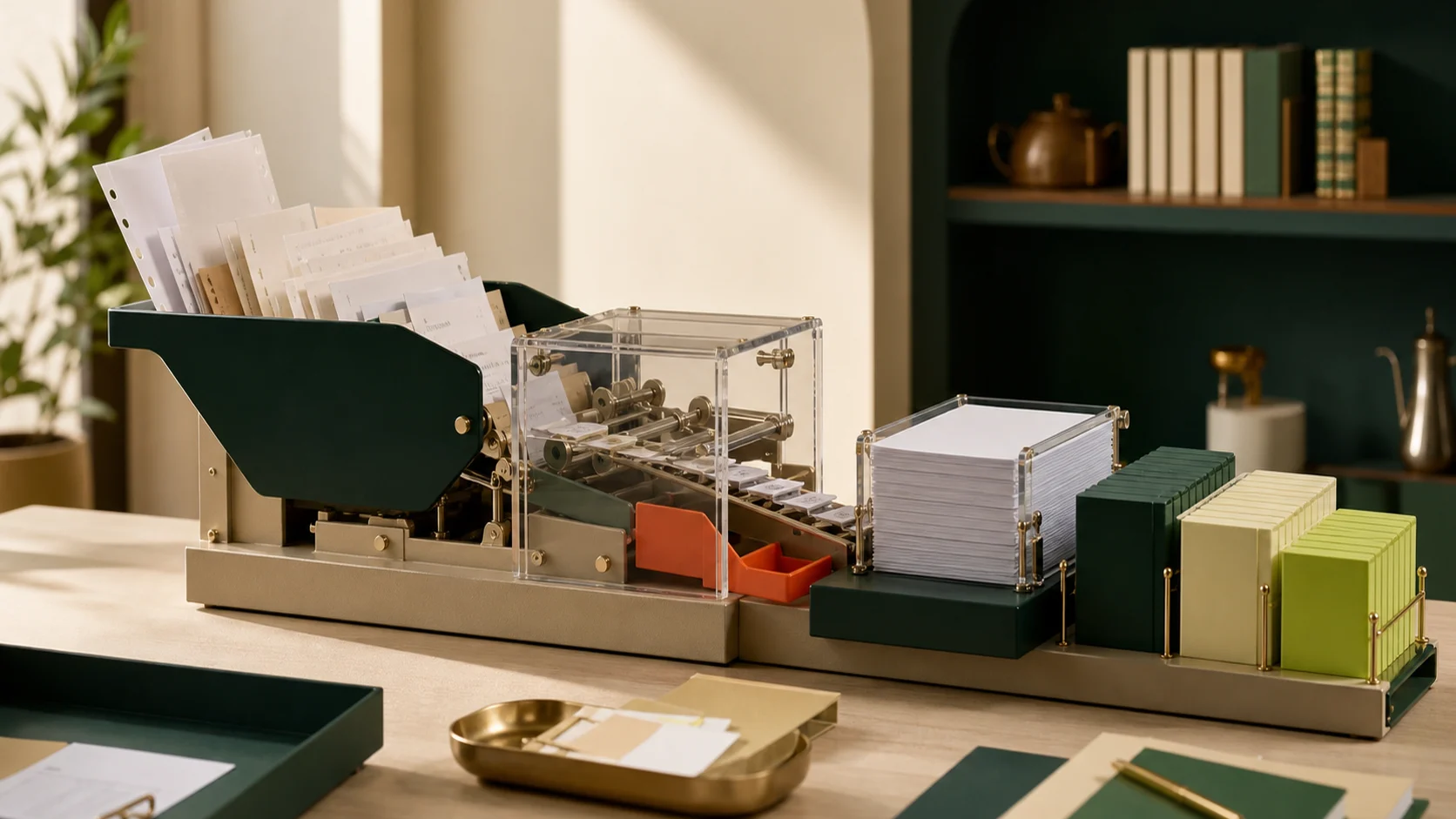
A dependable automation is more than a model call. It usually needs intake, parsing, validation, business rules, storage, a review screen, notifications, and audit history. The model is one component in a workflow, not the whole product. That is why many AI projects fail after the prototype: the demo can answer a prompt, but the business needs a system that runs every Monday morning and leaves an audit trail.
For Basira, the preferred pattern is simple: start with one workflow, connect only the systems required for that workflow, keep the first version human-reviewed, measure the result, then expand. If the automation cannot save time, reduce errors, or improve response speed in a way the owner can see, it is not ready to be scaled.
A realistic first 30 days
Week one is discovery: map the workflow, collect sample inputs, and define the approval rule. Week two is prototype: build the extraction or routing loop and test it on real examples. Week three is integration: connect the database, email, dashboard, or ticketing system the team already uses. Week four is controlled launch: run the automation with a human in the loop, measure the difference, and decide whether to expand.
That is the practical side of Oman's AI opportunity. The national direction is clear, but value arrives one workflow at a time. For an SME, the goal is not to look like an AI company. The goal is to remove the recurring work that slows the company down.